

Using Special Collections in your class
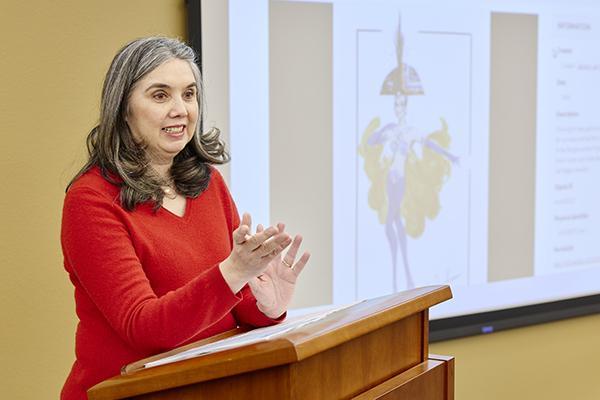
As part of our goal to support teaching and learning at UNLV, Special Collections and Archives encourages faculty and graduate students to incorporate the use of our materials into their research and teaching.
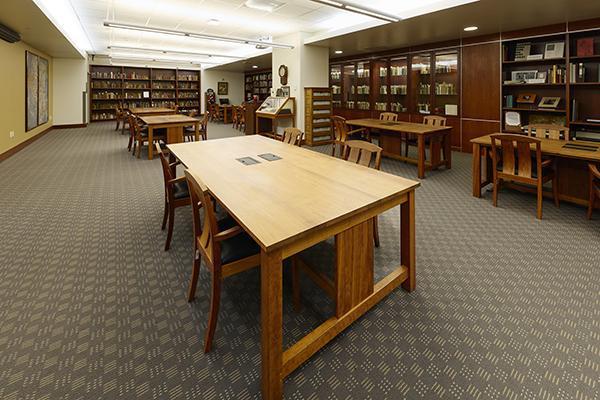
Classes are held in the Special Collections and Archives interior reading room and can be tailored to individual course topics and instructor needs.
Requesting instruction
Please submit the instruction request form at least 3 weeks in advance. This allows staff sufficient time to prepare and select materials appropriate for your class.
Instructor attendance is required. Instructors must remain present with their class during instruction sessions in Special Collections.
Class size and location
The interior reading room can typically accommodate up to 28 students.
For larger classes, we may be able to:
- Split the class into two sessions, or
- Visit your classroom to give a presentation and bring facsimiles.
Preparing your students
Please prepare students for working with archival materials before your session.
Reading room policies include:
- No food or drink, including water bottles, are allowed in the reading room. Any beverages brought into the space must be placed outside the reading room during the class.
- Backpacks and purses must be placed on the tables just inside the reading room.
- Pencil only may be used when working with Special Collections materials.
- Students must wash their hands before handling materials.
To aid faculty who wish to introduce their students to Special Collections and Archives and don't have time to include a physical visit, the following videos are available to view. Please feel free to download the videos or copy the links and include them in your WebCampus syllabus.
- Introduction to Special Collections and Archives: A brief introduction on how Special Collections and Archives documents the history of Las Vegas, the southern region, gaming, and UNLV along with an overview of the types of material and subject matter that we collect and preserve.
- Visiting Special Collections and Archives: An overview of the protocols and policies involved in a visit to Special Collections and Archives.
- Finding Aids: The Key to Research in Special Collections and Archives: An introduction to finding aids and how they enable users to access archival materials in Special Collections and Archives.
Since 2016, our Faculty Retreat program has offered UNLV teaching faculty the opportunity to “retreat” to the Special Collections and Archives reading room in January for a two-day workshop that allows them to design an assignment for a scheduled class that requires the use of Special Collections and Archives materials.
- Attendees learn how to frame the assignment using the transparent assignment design structure as they explore the collections of their choice.
- In addition to designing the assignment, they schedule an instruction session that will take place in Special Collections and Archives before the assignment is due.
The retreat is open to all disciplines and past retreats have included faculty from disciplines such as history, English, sociology, public policy, art history, landscape architecture, urban design, gender and sexuality studies, Asian-American studies, African-American studies, Spanish, and French.
Applications for the faculty retreat open in November for the January retreat prior to the start of the spring semester.
Please contact us for more information.
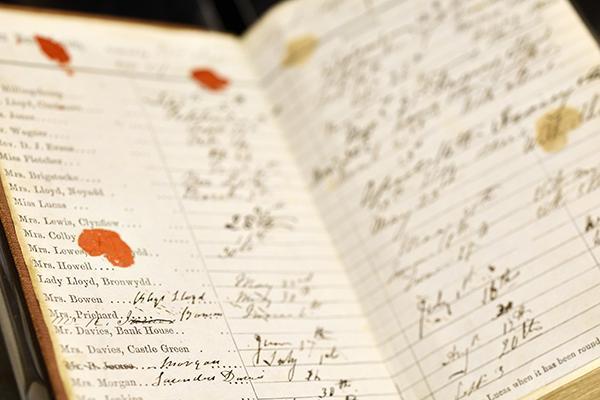
Many of our holdings are “primary sources.” Primary sources are documents, images, or artifacts that provide firsthand testimony or direct evidence of a historical topic. They usually were created at the time an event occurred or very soon afterward.
Some primary sources are unique and only exist in one copy, such as in a letter or diary. However, some primary sources can also exist in many copies, if they were popular and widely available at the time they were created, such as with a published photograph.
Learn more about using primary sources in Special Collections and Archives.